TWM Home Main Indexes Main Indexes What's New At TWM Search TWM Main Indexes

SAMPLE LEARNING GUIDE TO:

GETTYSBURG

(Note: Learning Guides vary in length and detail. All 285 provide valuable insights for transforming movies into tools for learning. More than half contain substantial background materials. Almost every Guide contains suggested answers to some Discussion Questions. 70 Guides contain suggested answers to all discussion questions.)

SUBJECTS --- U.S./1861-1865 & Pennsylvania;
SOCIAL-EMOTIONAL LEARNING --- Courage in War;
        Leadership;
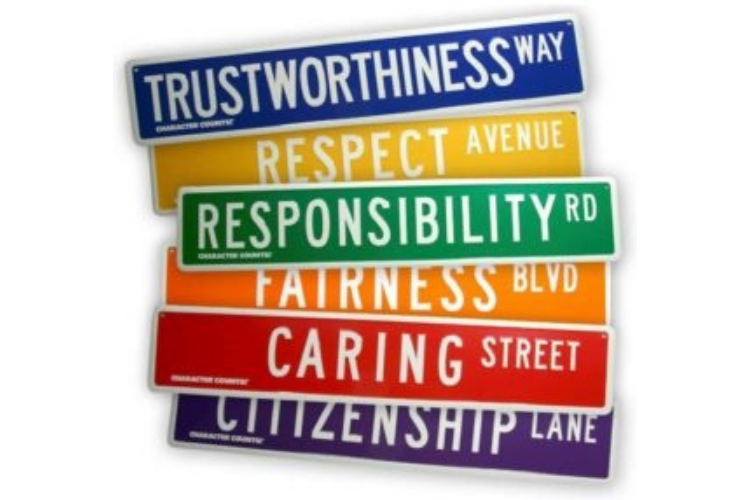
ETHICAL EMPHASIS --- Trustworthiness; Citizenship.

Age: 10+; Rated PG for language and epic battle scenes; Drama; 1993; 261 minutes; Color; Available from Amazon.com.

Description:     The Union victory at Gettysburg is considered by many historians to be the turning point of the Civil War. This film is a re-creation of the battle. The movie makers attempted to portray events as they actually occurred. The film is based on the historical novel, The Killer Angels, by Michael Shaara.

Benefits of the Movie:     Almost everything in this film conforms to the historical record, including Colonel Chamberlain's bayonet charge, Longstreet's objections to Lee's tactics, Lee's statement accepting blame for the defeat, etc. Good readers ages thirteen and up should be encouraged to read books on this important battle or the historical novel, The Killer Angels, before or after they see this film.

Possible Problems:    Minor. There is some profanity in the movie. The worst problem is that some of the beards look fake.

Parenting Points:     Tell your child that this film is true in most of its facts. When the movie is over ask and help your child to answer the Quick Discussion Question.

 
Unlock this treasure for use by educators and parents.

Only $11.99 per year for unlimited personal or classroom use of more than 285 Learning Guides.

Check out our helpful indexes.


CLICK HERE TO SUBSCRIBE!


LEARNING GUIDE MENU

Benefits of the Movie
Possible Problems
Parenting Points
Selected Awards & Cast
How to Use This Movie in Class
Helpful Background
Discussion Questions:
      Subjects (Curriculum Topics)
      Social Emotional Learning
      Moral-Ethical Emphasis
            (Character Counts)
Curriculum Standards
Bridges to Reading
Links to the Internet
Projects and Activities
Bibliography


Selected Awards, Cast and Director:

    Selected Awards:  None.

    Featured Actors:  Tom Berenger, Martin Sheen, Stephen Lang, Richard Jordan, Andrew Prine, Cooper Huckabee, Patrick Gorman.

    Director:  Ronald F. Maxwell.
 

QUICK DISCUSSION QUESTION:   Chamberlain, when he is talking to the men who refused to fight because their enlistments had expired, tells them that the Union Army is different than other armies that the world had known before. What was his point? Was he correct? Was the Confederate Army any different?

Suggested Response: Chamberlain meant that the army was fighting for an ideal, not for conquest. Chamberlain was historically incorrect, although not by much. We can think of several armies that fought for their ideals before the Civil War. First, the Continental Army that served under George Washington and won the American Revolution. Second, the armies that protected France from invasion by foreign nations during the French Revolution. They were fighting to prevent the reinstatement of the monarchy and for the ideals of the French Revolution. Third, the armies of former slaves that fought the French (Napoleon was Emperor of France at the time) for control of Haiti. There may have been others. However, Chamberlain's general point was well taken. Armies that fought for ideals were relatively new at that point in history.


How to Use "Gettysburg" in a Classroom Setting

This movie is four hours and twenty minutes long! Teachers can show short excerpts, for example: Chamberlain's speech to the mutinous solders, Buford's waking nightmare of how the battle could go badly, the scene at the campfire of the Southern officers and the English observer, the 20th Maine's defense of the Union's left flank, the charge of Pickett's division, the meeting with the runaway slave, etc. In the alternative, the entire movie can be shown in chunks through the course of the unit devoted to study of the Civil War. After each chunk there can be a lecture and discussion or assignments such as essays, research projects, or journal entries. "Gettysburg" is particularly appropriate to chunk because of its length and because: (1) it refers to so many subjects which are important to a study of this period in U.S. history; (2) the music is so powerful that it will pull the students right back into the film when you start it again after the lapse of a few days; and (3) the shifts back and forth between the Confederate and Union sides are very clear.

Give an introduction to the movie that will set the time and place of the battle in the context of the Civil War. Exactly what you say will depend upon the sophistication of the class and how much of the Civil War they have already studied. Explain any elements of the film that the students may not recognize or understand. Look for facts that will set up an "aha" moment when students see it on the screen. Tell them how many men are in a company, a regiment, a brigade, a division and a corps. See "Building Vocabulary" in the sidebar.

If you are only going to use a few excerpts from the movie be sure to include Chamberlain's speech to the mutinous soldiers of the Second Main Regiment. Almost every sentence can be the basis for essays, research or class discussion. Here are some suggested activities based on this speech:
    "There were a thousand of us then. There are less than 300 of us now." -- Research/Essay Project: Compare the losses in the Revolutionary War and the Napoleonic Wars with the losses in the Civil War. Why were the losses in the Civil War so high compared to the earlier wars? Good responses will include a reference to the fact that at this time defensive weapons (a soldier in a trench with a rifle) were more powerful than any offensive weapon.

    "All of us volunteered to fight for the Union, just as you did. Some came mainly because we were bored at home. Thought this looked like it might be fun. Some came because we were ashamed not to. Many of us came because it was the right thing to do." -- Research/Essay Project: Test this hypothesis: One of the major reasons that young men signed up to fight in the Civil War was that they were bored at home and, at the beginning, serving in the army seemed like it would be an adventure. A good response will conclude that this was a major reason for enlistment.

    "This is a different kind of army. If you look back through history, you'll see men fighting for pay ... for women, for some other kind of loot. They fight for land, [for] power. Because a king leads them, or just because they like killing. We are here for something new. This has not happened much in the history of the world. We are an army out to set other men free." -- (1) Research/Essay Project: Was Chamberlain right?. Were most Union soldiers fighting to abolish slavery? Would he have been right for men in the Union army from the following states: Maine, Kentucky, Maryland, Massachusetts, or Missouri? A good answer would conclude that his statement was true for men from Maine and Massachusetts only. The others were fighting to save the Union. (2) Lecture/Class Discussion Topic: Could a Southern officer have told his troops that they were fighting for a principle? An affirmative answer is correct. See the points made in suggestion #3. (3) Research/Essay Project: Is it true or false that many Southern soldiers thought that they were fighting the second American Revolution, trying to keep their states free from foreign domination and upholding the principles of the Founding Fathers? Note that a good response will include a recognition that one of the main reasons that the Southern colonies joined the American Revolution was a realization that slavery would soon be banned in the British Empire. The Southerners built guarantees into the Constitution protecting slavery. A good response will also include a reference to economic theories of the cause of the war.

    "America should be free ground. All of it. Not divided by a line between slave state and free. All the way from here to the Pacific Ocean." -- Research/Essay Project: Describe how the U.S. came to be divided into slave states and free states and the various compromises that were crafted during the first half of the 19th century in an effort to avoid the Civil War.

    "No man born to royalty. Here we judge you by what you do, not by who your father was. Here you can be something." -- Lecture/Discussion topic: We are so far away from this today, but it was very real to the soldiers fighting the Civil War. Kings and aristocracy ruled in most of Europe. It was less than 100 years since the King of England's rule in America had been overthrown. At the present time, we couldn't even think of going back to a system like that, but they certainly could. Stress the difference in our world and theirs.

    "Here is the place to build a home. But it's not the land. There's always more land." -- Lecture/Discussion topic: Where were we getting the land? What if you were a Native American and heard this speech? What would you think about the statement that "There's always more land"?

    "You and me. What we're fighting for, in the end... we're fighting for each other." Lecture/Discussion topic: Could this be said for any war?
Helpful Background:

It was the summer of 1863. The South's Army of Northern Virginia had been largely victorious. But the Confederacy was having increasing difficulties supplying its troops with food, clothing, guns and ammunition. The Union Army continued to grow in strength and its advantage in men and materiel continued to improve. The rebel commander, Robert E. Lee, believed that he had two choices: either to retire to Richmond, the capital of the Confederacy, and try to withstand a siege, a tactic that he knew would ultimately be unsuccessful, or to invade Pennsylvania. Lee chose invasion hoping that a brilliant victory in the North would force the Union to the bargaining table or encourage England to enter the war on the side of the South. At least he would be able to feed his troops from the rich Pennsylvania countryside. The pressure in Pennsylvania might cause the federal government to pull troops away from Vicksburg, which was then under siege by General Grant. (It did not.) By bringing the summer's campaign into the North, Lee would give some respite to the war ravaged Virginia countryside and disrupt the Union Army's plans to again march on Richmond.

At Gettysburg, the Union fielded 83,300 men and sustained 23,000 casualties. The Confederacy fielded 75,100 men and sustained 28,100 casualties. The Federal Army of the Potomac entered the battle under a new and untested commander, General George Gordon Meade.

Some historians disagree with the view that the Battle of Gettysburg was the "The High Water Mark of the Confederacy." They point out that Lee left the field with his army intact and that the South was able to sustain the fight for another 21 months. In any case, combined with Grant's capture of Vicksburg later that month, Gettysburg gave the Union hope of victory. As the film makes clear, Lee made a terrible mistake in having Pickett's division charge uphill into entrenched Union lines.

The film gives the impression that Union soldiers fought primarily to free the slaves. While this was true for many, especially soldiers from the New England states, the majority of Union soldiers would not have risked their lives to eradicate slavery. They were fighting to keep their country together. This was not simply patriotism. If states could secede from the Union, the country would eventually dissolve into several competing small countries. The dissolution of the United States would have shown that democracies could not hold together and were not stable. The cause of democracy in America and in the world would have been set back hundreds of years. It was to prevent this process of division that the North went to war. (As blacks were permitted to enlist in the Union Army and died fighting for the Union, and as the North and President Lincoln searched for a rationale for the horrific loss of life caused by the war, the abolition of slavery came to be more and more important. See Learning Guide to "Glory" and Learning Guide to "Abraham and Mary Lincoln - A House Divided".)

The Gettysburg Address was given by President Lincoln on November 19, 1863, at the dedication of the Gettysburg National Cemetery. It is a key document of American history and shows how, by that time, Lincoln was combining the twin goals of saving the Union and "a new birth of freedom" (abolition of slavery).
Four score and seven years ago our fathers brought forth on this continent, a new nation, conceived in Liberty, and dedicated to the proposition that all men are created equal.

Now we are engaged in a great civil war, testing whether that nation, or any nation so conceived, and so dedicated, can long endure. We are met here on a great battle field of that war. We have come to dedicate a portion of it, as a final resting place for those who here gave their lives that that nation might live. It is altogether fitting and proper that we should do this.

But in a larger sense we can not dedicate -- we can not consecrate -- we can not hallow this ground. The brave men, living and dead, who struggled, here, have consecrated it far above our poor power to add or detract. The world will little note, nor long remember, what we say here, but can never forget what they did here. It is for us, the living, rather to be dedicated here to the unfinished work which they have, thus far, so nobly carried on. It is rather for us to be here dedicated to the great task remaining before us -- that from these honored dead we take increased devotion to that cause for which they gave the last full measure of devotion -- that we here highly resolve that these dead shall not have died in vain; that this nation, shall have a new birth of freedom; and that this government of the people, by the people, for the people, shall not perish from the earth. (This Version from the Hay Draft.)
This film has been criticized because it fails to explain the motivation of the Southerners in fighting the war. Some of the reasons were: the strong force of regionalism in American society at the time, the oppression of Southerners by Northern banks and industries, and resentment at the North trying to impose its will on the South.
These are some of the reasons why the Southern troops who survived the Union's withering fire at Gettysburg would fight on despite the loss of half their numbers.

Robert E. Lee was worshipped by his soldiers and by Southerners generally. He was respected by Northerners for his prowess as a general. But there is another less positive view of General Lee. Lee had been a brilliant officer in the Union Army. He disliked slavery and did not agree with secession. Just before the war, when secession was imminent, President Lincoln offered Lee the command of the Union Armies. But because of his allegiance to his native state of Virginia, Lee joined the rebellion.
Robert E. Lee
An argument can be made that Lee forsook his country for a retrograde regionalism and an unworkable political theory holding that a state had a right to secede from the Union. This theory, in practice, would have done immense harm to the cause of democracy throughout the world by demonstrating that one of the world's first and most stable modern democracies could not hold itself together. In addition, the Confederacy that Lee fought to establish was dedicated to the barbaric, corrupt and utterly sinful institution of slavery. If Lee had remained loyal to the Union, the rebellion would have been over in a matter of months. The argument continues that many hundreds of thousands of American boys, Northern and Southern, died horrible deaths because of Lee's decision to side with the Confederacy.

There were prominent Southerners who remained loyal to the Union at great personal cost. Two examples are Thomas Hart Benton, Senator from Missouri, and Sam Houston, Governor of Texas. They sacrificed long and illustrious political careers because they refused to join the cause of disunion. Benton said, "I also am a Southern man but vote nationally on national issues ... I am Southern by my birth --- Southern in my convictions, interests and connections, and I shall abide the fate of the South in everything in which she has right on her side." (Benton and Houston are each the subject of articles in Profiles in Courage by John F. Kennedy. The quotation is at page 98 of the Inaugural Edition, 1961.) Lee may have been a brilliant general, but was he a statesman? This is an excellent discussion topic.

Chamberlain's Charge
We highly recommend a trip to the The Gettysburg National Military Park. Because so many men died there, because the battlefield is full of memorials, and because the Battle of Gettysburg saw the high water mark of the rebellion, a visit to Gettysburg is an emotional experience. There are memorial stones to every significant event of the battle. Look for the stone marker showing the point from which the men of Chamberlain's 20th Maine, low on ammunition, fixed their bayonets and charged down the hill to protect the Union left flank. March up the route of Pickett's Charge, from Virginia's statue of Robert E. Lee to Cemetery Hill. Cross "the Angle" from which the Union soldiers riddled the Southerners with rifle fire and then retreated. Walk the small field behind "the Angle" at which the high water mark was reached, and where, in hand to hand combat, Union soldiers completed the destruction of Pickett's division. Put a flower on the memorial which marks the spot where General Armistead fell, that tortured soul who loved his friend Hancock. There is a special energy, a special poignancy, about this place that impresses almost everyone who goes there. (If you can, visit during July 1 - 3, the anniversary dates of the battle, and attend one of the reenactments. The proceeds go to local charities.)
 
The Confederate army was fighting for ideals as well, for example, the right of a state to secede against people from the outside who wanted to impose their values, or for slavery. These ideals have not stood the judgment of time.


BUILDING VOCABULARY:
Posthaste, enfilade, and left oblique. Units of the armies were as follows:
    company: 50 to 100 men;

    regiment: 1000 - 1500 men (regiments were recruited by state and given a number, such as "20th Maine");

    brigade: usually 4 - 6 regiments, 4,000 to 9,000 soldiers (usually a brigade was led by a brigadier general);

    division: 2 - 5 brigades;

    corps: 2 or more divisions.

    The corps was the largest grouping within an army. Confederate corps were commanded by a lieutenant general and Union corps were commanded by a major general. General Longstreet commanded a corps within the Army of Northern Virginia. One of the divisions of his corps was commanded by General Pickett. One of the brigades in his division was commanded by Lewis ("Lo") Armistead. On the Union side Colonel Chamberlain commanded a regiment. It had 1000 men when it was formed but illness, injury and death had reduced its strength to 300. It then increased by about 100 men when Colonel Chamberlain convinced the mutinous soldiers of the Second Maine to fight. Source for numbers in military units: History Classroom.


Inspiration is Priceless!

We'll guide you to movies about particular curriculum areas. Check out our helpful indexes.

SUBSCRIBE TODAY! Only $11.99 per year for unlimited personal or classroom use of more than 285 Learning Guides.


Joshua Lawrence Chamberlain


The incidents in the movie involving Colonel Chamberlain dramatize actual incidents. He convinced about 100 mutinous soldiers from the 2nd Maine Regiment, whose enlistments had not expired when their regiment was disbanded, to pick up their guns again. He organized the charge down the hill when his soldiers ran out of ammunition. The face-off with the Confederate officer occurred except the man didn't run out of ammunition -- Chamberlain had his sword to the man's throat.

Although wounded six times, Chamberlain survived the war. He was appointed to take the flags of the surrendering Confederate units after Appomattox and ordered his soldiers to salute the surrendering Confederate battalions. This sign of respect was consistent with General Grant's orders. It was designed to help heal the wounds of the war and encourage those Southern units that remained in the field to surrender. After the war Chamberlain served four terms as governor of Maine and later was president of Bowdoin College. For excerpts of his description of the battle of Gettysburg, see Voices of Battle from the Gettysburg National Military Park Virtual Tour.


Use our carefully selected films to inform your students and children about THE MEN AND WOMEN WHO MADE OUR WORLD WHAT IT IS TODAY. See our Biographical Index.

Only $11.99 per year for unlimited personal or classroom use of more than 285 Learning Guides. SUBSCRIBE NOW!


Get the best that Hollywood has to offer

Subscribe to TeachWithMovies.com Only $11.99 per year for unlimited personal or classroom use of more than 285 Learning Guides.


Discussion Questions:

1.  Click here for Standard Questions Suitable for Any Film

2.  What do you think would have happened if the Union had lost the Civil War? Suggested Response: There is no one correct response. The share cropper system which replaced slavery involved less investment and responsibility by the landowners. Many historians argue that it was actually better for the landowners economically than was slavery. Most historians believe that slavery would have withered away on its own in the face of the mechanization of agriculture. Nor was slavery suited to an industrial society. A good discussion will mention these points.

3.  Was the Battle of Gettysburg a turning point in the Civil War? Suggested Response: There is no one correct response. Many historians believe that it was because the tremendous loss of Southern soldiers could not be made up. The South had no reserves and its manpower was exhausted. It also showed the North that its soldiers could win a battle against Robert E. Lee. On the other hand, the war lasted for almost another two years. The Battle of Gettysburg was fought in July of 1863 and Lee did not surrender until April of 1865. A good discussion will mention these points.

4.  Why were the Confederate soldiers fighting the War? Suggested Response: The Confederate soldiers saw the war as the second American Revolution. They were fighting for political freedom (states rights) and to rid their section of intruders from the North. Some were also fighting to uphold slavery, but most Confederate soldiers didn't own slaves. Robert E. Lee himself was against slavery.

5.  Why were the Union soldiers fighting the War? Suggested Response: The Union soldiers were fighting, primarily, to save the Union and the cause of democracy in the world. The U.S. was the leading, if not the only, democratic state in the world at the time. If the U.S. could not hold itself together, then the cause of democracy would have been set back for generations. Some Union soldiers, but a minority, were fighting to free the slaves. As black soldiers were allowed to fight and showed their valor more Union soldiers supported an end to slavery.

6.  Was Robert E. Lee a statesman? Should a general ignore the political and moral consequences of the wars that he fights? Suggested Response: One answer (other views are widely held) is: Leaving aside Lincoln's and the North's primary reason to oppose secession, i.e., that it would destroy the Union and do immeasurable harm to the cause of democracy in the world, the reason that Lee's decision (and that of every man who joined the Confederacy) was morally indefensible was that at the heart of the very concept of the Confederacy was slavery, a massive and horrid crime. Lee's decision was even worse than most because he acknowledged that slavery was wrong.

7.  Had Lee stayed in the Union Army, how long do you think the Civil War would have lasted? Suggested Response: Not very long. All the Union lacked, until General Grant took over, was a good leader for its armies. It had the equipment and brave soldiers.

8.  Had Lee simply sat out the War, how long do you think the South could have held out? Suggested Response: There is no one correct response. However, there were several very good Confederate generals. Lee was probably not essential for the South.

9.  In 1861 and 1862 many people expected that the Civil War would be short and determined by one or two great battles. Why did they expect this, and why were they wrong?

10.  General Meade was criticized for not following up on the victory and trying to crush Lee's army. This "failure" especially angered President Lincoln. However, most of General Meade's officers agreed with him that the battle had been won and an attack on Lee's army would risk turning victory into defeat. What do you think? Suggested Response: A few of the possible arguments: For attack: The Army of Northern Virginia had lost 1/3rd of its men and must have been demoralized; Lee's army was far from its supply lines; Against attack: as things stood, the Army of the Potomac had won a great victory, a counterattack would risk all that; in the war to that point, attacking had proved very risky, the advantage was with the defenders; Lee's army was wounded but not smashed nor was its morale destroyed; the Union Army had been fighting for three days and needed to regroup.

11.  List each major war fought by the United States (or your own country). What were the reasons for fighting and dying in each one? For each, was it worth it? Justify your answer.


To print this Learning Guide for personal or classroom use, click here.


Supplement School Curriculum with thought-provoking movies.

Subscribe Now!!! Only $11.99 per year for unlimited personal or classroom use of more than 285 Learning Guides.


Social-Emotional Learning Discussion Questions:

LEADERSHIP

1.  Give some examples of leadership shown in this film.

2.  Why did Colonel Chamberlain tell his brother to distribute the soldiers of the Second Maine Regiment who had decided to fight among the companies in the regiment? Suggested Response: His purpose was to make sure that the mutinous soldiers bonded with the other men in the regiment and that they didn't get together and hatch more plans for mutiny.

3.  Was General Pickett branded a coward because he didn't lead his troops from the front like General Armistead (who was one of the brigade commanders in Pickett's division)? Was this a failure of leadership? Suggested Response: It was not a failure of leadership. In the Civil War, division commanders were responsible for coordinating troop movements and it was perfectly acceptable for them to lead from the rear. Pickett was not faulted by experienced military observers for his role in the battle.

COURAGE IN WAR

4.  In the Civil War, defensive technology (such as repeating rifles) gave defenders a great advantage. Can you explain why tens of thousands of soldiers on each side, in battle after battle, had the commitment and the courage to march in regular order against the withering fire of the defenders while those around them fell with hideous and usually fatal wounds?

5.  Most of the Union soldiers took the division of their country personally and were willing to risk their lives to stop it. Many Union soldiers were willing to risk their lives to rid their country of slavery. Create a definition of patriotism that explains what these men did.


TEACH SOCIAL-EMOTIONAL LEARNING using our insightful discussion questions.

Only $11.99 per year for unlimited personal or classroom use of more than 285 Learning Guides. Subscribe Now!

Moral-Ethical Emphasis Discussion Questions (Character Counts)

Discussion Questions Relating to Ethical Issues will facilitate the use of this film to teach ethical principles and critical viewing. Additional questions are set out below.

TRUSTWORTHINESS

(Be honest; Don't deceive, cheat or steal; Be reliable -- do what you say you'll do; Have the courage to do the right thing; Build a good reputation; Be loyal -- stand by your family, friends and country)


CITIZENSHIP

(Do your share to make your school and community better; Cooperate; Stay informed; vote; Be a good neighbor; Obey laws and rules; Respect authority; Protect the environment)


1.  Patriotism is love of one's own country. However, a civil war fractures the concept of country. People on each side believe that their opponents have betrayed a principle that is vital to the essential nature of the nation and that, as a result, they have become traitors. What principles did each side of the Civil War espouse? Suggested Response: On the Union side, the concept was the indivisibility of the Union and the importance to the cause of democracy of demonstrating that one of the first democratic countries the world had ever known could keep itself together. A minority also wanted to free the slaves. On the Confederate side there was a belief in the right of individual states to leave the federal government, an allegiance to their state and section of the country which they believed had been invaded, and for many a desire to defend slavery.

2.  Why did the soldiers of the Union and Confederate armies willingly march to their deaths in the many battles of the Civil War? The history of every country is replete with men and women who have served their country at great risk and who have died as a result. These are not only soldiers but also political leaders (who are often exposed to the risk of assassination) and other controversial people such as civil rights workers (Medgar Evers, Martin Luther King). What did patriotism mean for them? Suggested Response: The word "patriot" comes down to us from the Greek word meaning "of one's fathers." Patriotism is a sense of loyalty to your community, a realization that who you are and what you have become depends upon that community and that therefore your loyalty to the community and its values is, in reality, a loyalty to your integrated self.

Patriotism includes more than being a soldier willing to die in war. There are patriotic people who will not kill for their country. Some of these people make a greater contribution than many thousands of soldiers combined. Here is one example: James Lawson is now a retired Methodist minister. He is black. During the Korean War, he refused service in the Army as a conscientious objector and served time in jail as a result. After he got out of jail, Reverend Lawson went to India and studied Gandhian non-violence in an ashram. In 1954, while he was still at the ashram, he heard a news report about the Montgomery Alabama bus boycott (see Learning Guide to "The Long Walk Home"). Reverend Lawson then headed home and made contact with Dr. Martin Luther King, the leader of the boycott. Reverend Lawson became the most important theoretician for non-violence for the U.S. Civil Rights Movement and the conduit for the transfer of knowledge about non-violent civil disobedience from India to the U.S. Reverend Lawson saved countless lives and helped with the peaceful resolution of a serious moral contradiction in U.S. society. You can see pictures of Reverend Lawson training college students to conduct the first lunch counter sit-ins in a documentary called A Force More Powerful. Reverend Lawson was patriotic, but he was not willing to take another life or participate in a military establishment that would.


3.  How can people act in a patriotic way if their country has decided to go to war but they think that it was a bad decision? This has been a question for many people in the U.S. during the last three substantial wars that the country has fought: Vietnam and both Gulf Wars. Suggested Response: Patriotism is a value that can be easily manipulated by unscrupulous politicians and government officials. See All Quiet on the Western Front. The answer requires a look at the role of the majority and the role of the minority in a democracy. In the U.S., war is declared by the majority acting through the Congress, the people's elected representatives. In many other democratic countries, war is declared by parliament, also the people's elected representatives. Once Congress or parliament decides to go to war, no patriotic person in the society can oppose the war effort and, in fact, they should support it unless they are conscientious objectors. However, that doesn't mean that citizens lose the right, in fact it is an obligation, to speak out against policies of their government with which they disagree. This is especially true with respect to policies that relate to life and death issues such as war. Protesting a war probably does undermine to some extent the morale of the troops risking their lives on the battlefield. (Politicians who are unscrupulous or who don't understand the proper role of dissent in a democracy will claim that this means there should be no dissent during time of war.) But there is a larger and more important principle at work, that is, the necessity of free speech and public debate on issues of importance. For example, most would now agree that the Vietnam war was unwinnable, that it was bad policy, and that the lives sacrificed in that war were wasted. The people who demonstrated against the Vietnam war were right and it was important that they spoke their minds. The anti-war protests were a major impetus behind the U.S. getting out of that war. (However, those who were opposed to the Vietnam war who vented their frustration on the troops coming home were wrong. The troops were not at fault. Any fault lay with the majority and the government.) So, for those who oppose a war, patriotism involves supporting the war effort but denouncing the war at the same time.

Being patriotic and supporting the war effort in some extreme cases is not the principled thing to do. Some people realize that their values differ so substantially from those of their countrymen that they cannot support the war effort at all. Since war involves life and death, it makes a strong call on the loyalties, as does opposition to war. The situation of each person is different and must be judged on its own. However, two extremes can set some parameters. Some people who cannot support a war effort but who are drafted into the military decline to serve and take the punishment provided for by law. Reverend Lawson (see response to preceding question) did this. While the action is not patriotic, it is principled and satisfies any ethical or moral test. When these people have served their time they return to society and can be as patriotic and valuable, or more so, than many soldiers. Again, Reverend Lawson and his contribution to the Civil Rights Movement is a good example. Another principled, but unpatriotic, action is to leave the country and resign from being a citizen. During the Vietnam war, some young men went to Canada or other countries to avoid the draft. These people have sacrificed their association with the country. Whether they are readmitted to citizenship depends upon the mercy of the majority acting through its government. Several years after the Vietnam war was over, President Jimmy Carter proposed a program to forgive young men who fled to other countries to avoid the draft and to allow them to return home.


(Additional questions on these topics are set out in the "Social-Emotional Learning/Courage in War section above.)


Teachwithmovies.com is associated with Character Counts and uses The Six Pillars of Character to organize ethical principles.



TeachWithMovies.com contains an ETHICS CURRICULUM derived from Character Counts.

Only $11.99 per year. Subscribe Today!


Bridges to Reading: "Gettysburg" is based on The Killer Angels, a historical novel by Michael Shaara. [Grades 9 - 12]. There are hundreds of excellent books on the Civil War. We list a few of them below, based either upon our own review or recommendations from librarians or educators. An on-line article entitled Civil War in Children's Literature discusses some of the books described below and recommends several others.

Fiction
    Soldier's Heart by Gary Paulsen [Grades 5 - 8] Abraham's Battle: A Novel of Gettysburg by Sara Harrell Banks [Grades 4-7]
    Pink and Say, by Patricia Polacco [Grades 5+]
    Cezanne Pinto, by Mary Stolz [Grades 5+]
Non-fiction
    Til Victory is Won: Black Soldiers in the Civil War by Zack Metgar;
    Gettysburg: The Final Fury by Bruce Catton. This short work by an eminent historian contains 41 illustrations and 5 maps. It describes the battle and its historical context. [Grades 5 - 8]
    The Boys' War by Jim Murphy describes in text and pictures the experience of children who fought in the War. This book won the Golden Kite Award for Non-fiction in 1990.
    National Geographic Guide to Civil War Battlefield Parks by the National Park Service; Excellent if you are going to visit any Civil War battlefield sites.
Purchase these books at Amazon.com.


Culpeper, Va. Officers of the 80th New York Infantry, Provost Guard


MOVIES ON RELATED TOPICS: All films listed in the Subject Matter Index under U.S./Civil War.


PHOTOGRAPHS, DIAGRAMS AND OTHER VISUALS:  


At $11.99, one year of TeachWithMovies.com is less than a ticket to a movie, a box of popcorn and a drink.

Subscribe now for unlimited personal or classroom use of more than 285 Learning Guides for one year.


Links To The Internet: For Web Sites on the Generals who Fought at Gettysburg:

About the Gettysburg Address: Sites about the movie:


OTHER LESSON PLANS:


Projects and Activities: See Projects Suitable for Any Film. Another suggestion is to assign a research project and essay on why England banned slavery decades before the U.S. Was it a moral or an economic decision?


Bibliography: In addition to web sites which may be linked in the Guide and selected film reviews listed on the Movie Review Query Engine, the following resources were consulted in the preparation of this Learning Guide:
  • Gettysburg: The Final Fury by Bruce Catton, Doubleday & Company, Inc., Garden City, N.Y., 1974, and
  • Profiles in Courage, John F. Kennedy, Harper & Row, New York, Inaugural Ed., 1961.


TeachWithMovies.com is updated frequently. See What's New on TWM. This particular Learning Guide published November 8, 2004. The Parenting Points section was added on July 26, 2006. Some links deleted and addresses revised on February 27, 2007. The Guide was edited and miscellaneous minor changes made on July 17, 2007. Typographical errors were corrected on December 16, 2007.


Spread the GOOD NEWS about ...
                                                       TEACHWITHMOVIES.COM!
Click here to recommend this site to a friend!
 

Copyright © 2004, 2006, 2007 by TeachWithMovies.com, Inc. All rights reserved. Note that unless otherwise indicated any quotations attributed to a source, photographs, illustrations, maps, diagrams or paintings were copied from public domain sources or are included based upon the "fair use" doctrine. No claim to copyright is made as to those items. DVD or VHS covers are shown by permission of Amazon.com and may be subject to copyrights shown thereon. The television set logo and the pencil and filmstrip logo are trademarks of TeachWithMovies.com, Inc.

TeachWithMovies.com, Inc. grants to its subscribers a limited license to print Learning Guides and Indexes for classroom or personal use. Click here for details.

To print this Learning Guide for personal or classroom use, click here.