SAMPLE LEARNING GUIDE


TWM does not provide the movies . . .
    We provide curriculum materials for teachers.


  • Snippet Lesson Plans,

  • Movie Lesson Plans,

  • Movie Learning Guides,

  • Standard questions to use
    with any movie,

  • Standard assignments to
    use with any movie,

  • a Film Study Worksheet,

  • and much more!!


Super Size Me

SUBJECTS — U.S./1991 - present; Medicine;
SOCIAL-EMOTIONAL LEARNING — Taking Care of Yourself;
ETHICAL EMPHASIS — Responsibility.

Educationally Enhanced Version: Age: 11+; MPAA Rating -- PG for thematic elements, a disturbing medical procedure, and some language; Documentary; 2005; 100 minutes; Color; Available from Amazon.com.

This sample is just a taste of the Super Size Me Movie Lesson Plan. At TeachWithMovies.com, $11.99 per year provides access to 350 Learning Guides and lesson plans covering many topics in the K-12 curriculum. Join TWM and make movies tools for learning!

Learning Guides are flexible tools that allow teachers to easily develop lesson plans. Each Guide also has a special section for parents who want to use movies to supplement curriculum.
Description: Morgan Spurlock ate only food from McDonald's for 30 days: breakfast, lunch, and dinner. He was thoroughly tested by doctors before he started his "diet" and periodically tested throughout the 30 days. By the end of his experiment, the changes in his blood chemistry and the stress on his organs approximated the liver failure seen in advanced alcoholics, his cholesterol had risen to dangerous levels, and he had gained 24.5 lbs.

Benefits of the Movie: The fast food industry spends three billion dollars a year promoting its products. Young children are attracted with special meals, toys, clowns, birthday parties, and playgrounds. For teenagers, "Big Food" relies on trendy commercials and celebrity endorsements.

Super Size Me and the information presented in the lesson plan are small but helpful antidotes to fast food industry advertising. They are an ideal way to supplement a health class curriculum on nutrition, the dangers of convenience food, and the effects of advertising.

Possible Problems: None. (The profanity and references to sexual performance which were in the original film have been removed from the educational version.)

Parenting Points: This movie can help convince children to moderate their consumption of "foods" that are dangerous to health. Watch the movie with your kids and take its lessons seriously. Review the Student Handout provided with this lesson plan. Tell some of the facts and anecdotes to your kids or have them read the handout. Taking these lessons to heart will help you and our children live healthier and longer lives.

A Note to Teachers

This Lesson Plan consists of:

  • A handout in word processing format to be given to students as homework or to be read in class after they have seen the film;
  • Suggested points to make in a very short lecture after the film (these points can also be worked into the class discussion);
  • Discussion questions to raise in class (with suggested points to cover);
  • A homework assignment (also available in word processing format); and
  • An answer key for the homework assignment.
Click on the link for samples of the discussion questions and the homework assignment. The handout, the discussion questions, and the homework can be changed or supplemented to meet the needs of particular classes. Together with the movie, the Lesson Plan will take approximately five 55-minute class periods. The handout will be periodically updated as new data becomes available.

The case against fast food, soft drinks, snack foods, and frozen meals is clear and compelling. Their nutritional value is limited and they contribute to overweight and obesity, which sicken and kill millions every year. The question is how to get kids to understand this and to at least moderate their consumption. This Lesson Plan seeks to further that goal.

CONVENIENCE FOOD STUDENT HANDOUT

Convenience food means fast food, soft drinks, snack foods, TV dinners, and the already-prepared foods we can buy in the store. It's supposed to be cheap, make our lives easier, and taste good. But there's a hidden cost: it often ends up hurting our health.

The Obesity Epidemic

This section is a description of the world-wide obesity epidemic and its particularly severe impact in the United States. It also includes information about the health risks of being obese or overweight and the history of some of the advertising and marketing strategies used to sell people more food and fatter food than they need.

Ersatz Food

The student handout contains information about the chemical changes in convenience food to make it taste and look better.

Additives and Contaminants

This section will scare just about anyone.

Foods to Avoid or Limit

This student handout contains a list of foods to avoid or limit.

Being an Educated Consumer

This section will help students learn to read the labels on packaged food products.

A Few Practical Tips for Better Eating

There is hope. This section provides a few hints. NOTES FOR LECTURE OR POINTS TO STRESS DURING CLASS DISCUSSION

These notes will help teachers give direct instruction that supplements the movie.


HOMEWORK ASSIGNMENT FOR SUPER SIZE ME

1. List four different types of convenience foods.

2. What is a common definition of obesity? Give your answer in terms of the percentage of a person's weight that is comprised of fat.

3. List the three most important causes of preventable death for the entire population in the U.S. Then list the three most important causes of preventable death among U.S. teenagers.

4. In terms of BMI, what is a healthy weight, what is overweight, and what is obesity?

5. State in words the formula for BMI and describe what it measures. Be sure to include a reference to pounds and inches in your statement. Then calculate your own BMI.

6. For the most current year for which we have statistics on how many children were obese, state the year, the number of children in the U.S. who were obese, and their percentage of the population of children.

7. Name ten serious diseases that obese people get more often than people who are not obese.

8. Why are people in the U.S. getting fatter? Mr. Spurlock told us. What did he say?

9. What percentage of meals do Americans eat in restaurants, including fast food outlets?

10. Explain the psychology behind super sizing. Why is it a good marketing technique?

The Super Size Me Lesson Plan contains an additional 30 suggested questions from which teachers can choose when creating the homework assignment.

Discussion Questions:

THE ISSUE OF PERSONAL RESPONSIBILITY

1. Most people know that convenience food (CF) is loaded with salt, sugar, and fat. They have heard that CF is a substantial factor in causing the obesity epidemic which sickens and kills millions every year. Some of them know that in the U.S., the obesity epidemic is the second leading cause of preventable death. List the facts that affect the answer to the following question: When a consumer eats fast food from a restaurant like McDonald's or Burger King or buys convenience food in a store, who is responsible for the deterioration in the consumer's health caused by eating that food? Is it the consumer or is it the company that runs the restaurant? Suggested Response: Start by asking the students what they think the facts are. Write their suggestions on the board using a T chart summarizing the facts. Have students write the details of the factors in their notebooks.

The list should include at least the following facts. Students might come up with more. Write the underlined headings on the appropriate side of the T chart. Note that some of the facts may go on both sides of the T chart.

    (1) Consumer Decides -- People are not forced to eat convenience food or to go into a fast food restaurant.

    (2) Advertising/Marketing -- Convenience food manufacturers and fast food restaurants try to sell as much food as they can. They use a number of marketing tactics including advertising aimed at children, pricing structures aimed at getting people to purchase food they don't need (a good example is super sizing, the increase in portion sizes for just a small increase in price), and advertising aimed at subconscious urges and desires (like the desire to be cool and with the "in crowd")

    (3) Nondisclosure -- Convenience food manufacturers often do not fully disclose the dangers of the foods they serve. Frequently, they lie and dissemble to hide how unhealthy their food really is.

    (4) Ersatz Food -- Convenience food manufacturers manipulate the food to make it taste better, to make it less expensive, and to add to its shelf life in ways that make the food more dangerous and less healthy.

    (5) Cheap -- CF is often cheap and there is a benefit to consumers in having inexpensive food available to them.

    (6) Tasty -- CF often tastes good and consumers like that.

    (7) Profits -- The CF companies make a large profit, hundreds of millions of dollars.

If the discussion stalls, the questions set out below might get the discussion going again.

    A. If the industry creates the desire for the product through advertising, isn't it responsible for what happens when people try to satisfy that desire?

    B. Advertising plays upon people psychologically in ways that are not immediately apparent to adults and to children, especially young children. Shouldn't the industry which puts out that advertising pay for some of the collateral damage?

    C. The convenience food companies have not been up front in their advertising about the dangers their products present: the calories, the trans fat, the saturated fat, the sugar and the salt. For example, it is known that trans fats clog arteries and cause heart disease. The trans fat in convenience food is all man-made. A chemical process is used to convert unsaturated fat to saturated fat. If a fast food restaurant advertises heavily, trying to get people to buy its product, claiming that it tastes good, and then puts trans fats into it to increase shelf life, doesn't that restaurant have a responsibility to warn the consumer that there are substances in the product that may be harmful? Is this also true of convenience food makers who put high amounts of salt, sugar, or fat in the food?

    D. What about the fact that convenience food companies lie about the health effects of their food? Remember what Mr. Spurlock found when he tested the data posted on the McDonald's web site?

    E. The final decision to purchase is made by the consumer. While the company creates the desire, no one forces the consumer to act on it.

    F. What about this class, people who have seen the movie and had this lesson? The class has been warned and the students in the class are now educated consumers. If one of the students goes into a fast food restaurant, who's responsible now?

    G. No one has time to check out the health benefits of all the food that they eat. How can the consumer be held responsible?


2. Once the list includes at least the seven factors described above, ask for an answer to the question of who is responsible, the consumer or the company. Suggested Response: TWM suggests that the strongest answer is that there is responsibility on both sides. After about five minutes, cut off discussion of this issue and pose the next question.

3. Tell students to imagine their class is a congressional committee with the responsibility to recommend what the government should do to fight the obesity epidemic and to regulate the fast food industry. Tell the class that this will be somewhat like the government's campaign to reduce smoking. The plan should be based on the extent of responsibility that the consumer or the industry bears for the harm caused by the eating at places like McDonald's and Burger King. It should be practical. It should be effective. Suggested Response: Here are some ideas about general ways to approach the problem. The class can add to this list and must determine how best to implement these ideas. Possible solutions might include:

  • a sales tax on fast food to pay for PR campaigns to limit consumption, to defray the increased medical costs of those who eat fast food, or to subsidize fresh food production; the problem with this approach is that it would be very hard to determine which restaurants served fast food, so the tax would have to be on all restaurants;


  • limits on restaurant hours;


  • limits on the age of customers;


  • requirements that warning labels be placed on food wrapping and menus;


  • requirements that alternative healthy choices be offered;


  • prohibition on advertising or limits on advertising, such as limits on advertising directed at children;


  • creation of a well-designed PR campaign to convince people to stop eating convenience food;


  • prohibitions on super sizing;


  • limits on the calorie content, salt content, and fat content; and


  • limits on the types of foods that can be sold, e.g., all meat must have a low fat content; all meals must have a salad, a cooked green vegetable, and cheese or milk.

Write each suggestion on the board. When the creativity of the class has been exhausted or the time allotted for this part of the exercise has been consumed, have the class debate whether the proposed solution is just, practical to implement, and effective. Then let the class vote on which regulations to adopt.


The Super Size Me Lesson Plan contains a few additional questions that teachers can use in presenting the film to a class. The Lesson Plan also contains suggested answers to each of the questions.

Social-Emotional Learning Discussion Questions:

TAKING CARE OF YOURSELF


Can you really take care of yourself if you don't pay attention to what you eat? Suggested Response: No. You are what you eat. The food that you put into your body is all that your body has to replenish and grow its cells.


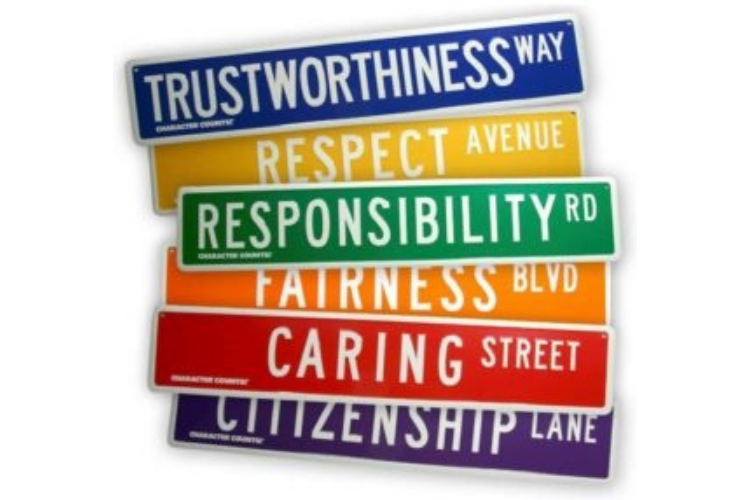
Moral-Ethical Emphasis Discussion Questions (Character Counts)

TWM's Discussion Questions Relating to Ethical Issues will facilitate the use of this film to teach ethical principles and critical viewing. Additional questions are set out below.

RESPONSIBILITY


(Do what you are supposed to do; Persevere: keep on trying!; Always do your best; Use self-control; Be self-disciplined; Think before you act -- consider the consequences; Be accountable for your choices)


See Discussion Questions #1 - 2 above.

• When an adolescent (ages 11 - 18) makes a decision about how to take care of his or her body, including weight and nutrition, who are the people who will be affected by this decision? (We call them stakeholders.) Note that some of the stakeholders may not yet be alive. Suggested Response: Stakeholders include the adolescents themselves (that means you!), spouses, siblings, children, parents, employers, and friends. All of these people are affected by how well a person takes care of him or herself. These decisions are especially important for adolescents because they are growing and laying the foundation for their future health


Bridges to Reading: Don't Eat This Book: Fast Food and the Supersizing of America by Morton Spurlock, 2005, G.P. Putnam's Sons, New York. Mr. Spurlock's style is breezy and irreverent and will appeal to young adults. In his book, he repeats and supplements the information provided in the film. A few sections give some of the background behind the production of the movie. TeachWithMovies.com recommends this book highly.

The Super Size Me Movie Lesson Plan contains suggestions for additional books about convenience food.


Links To The Internet

- Healthy Chef Alex; you saw her in the movie, now try her recipes;
- American Obesity Association.


Additional links to the Internet are contained in the Super Size Me Movie Lesson Plan.


Projects And Activities Assignments, Projects and Activities:

The Super Size Me Movie Lesson Plan suggests many concluding assignments for this unit.


Bibliography

In addition to books described in the Bridges to Reading Section, the websites which may be linked in the Guide, and selected film reviews listed on the Movie Review Query Engine, the following resources were consulted in the preparation for this Lesson Plan:

Fat-Proofing Your Children ... so that they never become diet addicted adults, by Vicki Lansky, 1988, Bantam Books


Last updated October 6, 2011. Adapted for use as a sample on May 27, 2009.